- ¿Cuál es la eficiencia de las luces incandescentes de Navidad que la gente utiliza?
- ¿Son las luces LED de Navidad una opción mejor comparadas con las luces tradicionales?
- Los LED parecen ser algo demasiado bueno para ser cierto. ¿Hay algún aspecto por el que deba preocuparse?
Las luces de Navidad se han asociado siempre a las bombillas. De hecho, en las navidades de 1880, justo un año después de que creara la primera bombilla incandescente, Thomas Edison colocó la primera tira de luces eléctricas fuera de su laboratorio, y dos años más tarde colgó 80 bombillas diferentes alrededor el árbol de Navidad.
Hoy en día, las luces de Navidad forman parte inseparable de dichas fiestas. Una encuesta de 2013 realizada por la Fundación Internacional de Seguridad Eléctrica de Estados Unidos, mostró que dos terceras partes de los americanos decoraban sus árboles de Navidad con luces eléctricas. Al menos un 63% utilizaba un cable de extensión para conectar las luces y la mayoría dijo que no examinaban regularmente dicho cable.
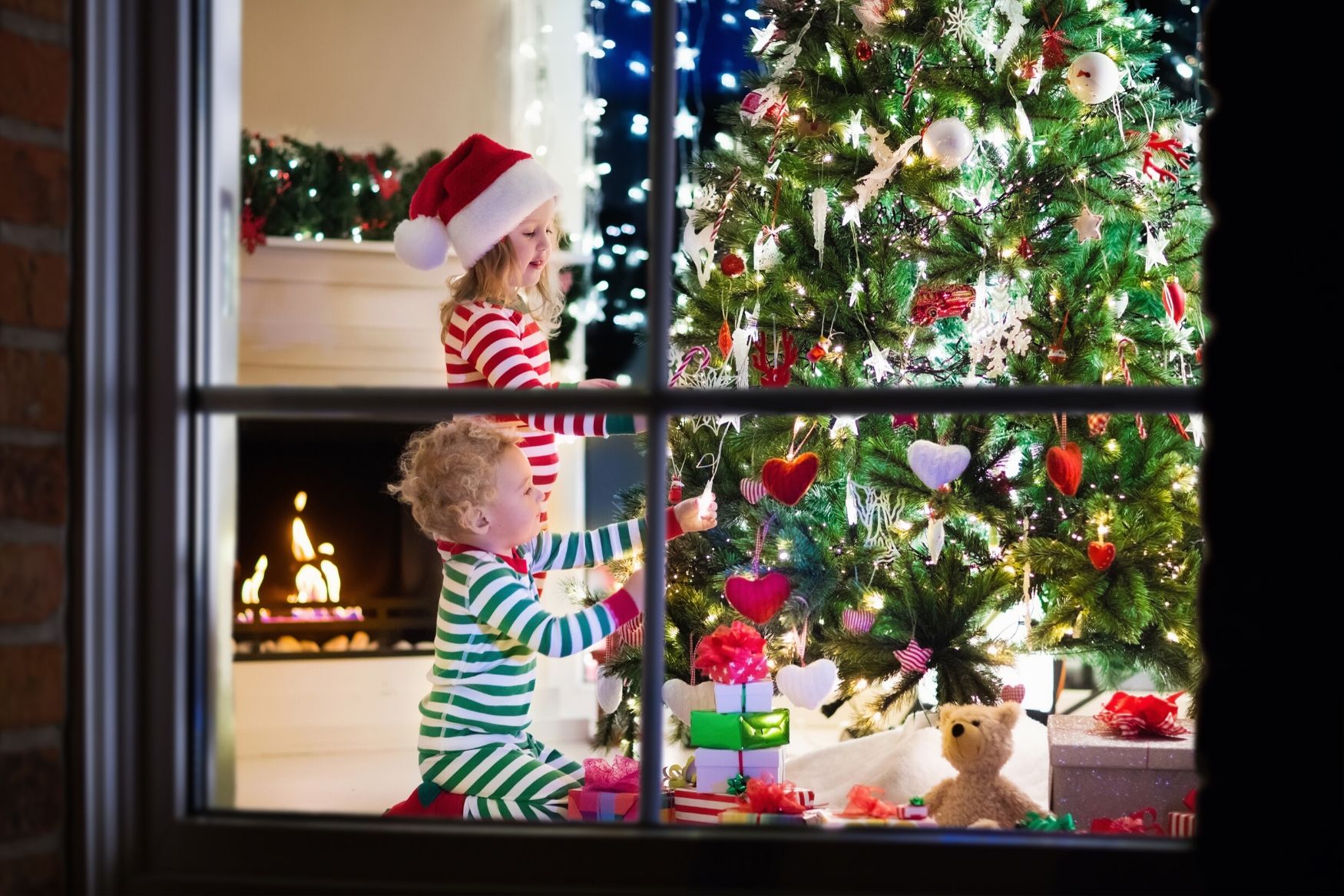
Está claro que las luces de Navidad son una parte importantes de la decoración de las fiestas, pero también pueden contribuir enormemente al aumento del recibo de la luz durante ese mes, especialmente si se usan bombillas incandescentes. Una casa decorada con 80 metros de luces incandescentes de navidad puede consumir casi 2000 vatios, lo que equivale a un incremento en la factura de la luz de más de 50 dólares por temporada festiva.
Sin embargo, las bombillas clásicas y las retro C7 que consumen tanta energía podrían tener sus días contados. En una encuesta de 2015 realizada por Christmas Lights, Etc, el 57% de los encuestados dijeron que prefieren luces de navidad LED, o diodos emisores de luz, en lugar de las luces incandescentes tradicionales.
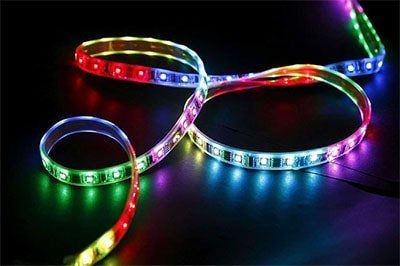
¿Qué son los LED?
Los LED son una tecnología luminosa que funciona por medio de la electroluminiscencia, una propiedad que poseen ciertos materiales que hace que emitan luz cuando los atraviesa una corriente eléctrica.
El mecanismo de los LED lo descubrió por primera vez en 1907 el ingeniero eléctrico británico H.J. Round quien mientras experimentaba con radios antiguas de cristal descubrió que los cristales de carburo de silicio emitían luz al aplicarles un cierto voltaje. No tuvo lugar ningún progreso real con esta tecnología hasta 1955, cuando Rubin Braunstein informó que ciertos diodos emiten luz en un espectro de infrarrojos cuando los atraviesa una corriente. El primer LED que emitió luz visible se creó en 1962 y producía luz roja. A partir de ese momento, la tecnología comenzó a avanzar a pasos de gigante y una unidad pasó de costar 200 dólares en 1968 a costar 0,5 dólares en los años 70, gracias a las mejoras de los procesos manufactureros.
Los LED se usan en multitud de objetos, desde la luz de fondo de los televisores LCD hasta las linternas, e incluso han entrado a formar parte de la iluminación del hogar, donde han empezado a desplazar a las lámparas fluorescentes.
Hoy en día la industria LED ha alcanzado enormes proporciones y se prevé que crezca y llegue a los $30,5 mil millones de dólares en 2016. Los LED se usan en multitud de objetos, desde en la luz de fondo de los televisores LCD hasta en las linternas, e incluso han entrado a formar parte de la iluminación del hogar, donde han empezado a desplazar a las lámparas fluorescentes. El árbol de Navidad de la Casa Blanca está iluminado con luces LED, así como también lo está el árbol del Centro Rockefeller de Nueva York. Incluso las calles están siendo iluminadas con LED inteligente, con farolas equipadas con una serie de sensores que reúnen información para prevenir crímenes, controlar el tráfico y mucho más.
Echemos un vistazo a por qué los LED han pasado a usarse de repente y de forma generalizada en la iluminacion navideña de hoy en dia. Desglosamos las 5 razones que explican porqué hay mejores opciones que las bombillas incandescentes, no solo en luces decorativas sino también en otras aplicaciones.
1. Los LED ahorran energía
Empezamos con la cuestión del ahorro energético: Los LED utilizan como mínimo un 75% menos de energía que las bombillas incandescentes equivalentes. Una factura de 2,74 dólares por la iluminación de un árbol de navidad durante todas las fiestas con diminutas bombillas incandescentes viene a ser de tan solo 0,82 dólares si se ilumina con luces LED similares. Calcule el coste de un juego completo de luces de navidad y podría ahorrarse cientos de dólares a lo largo de los años.
Este ahorro también es aplicable a los LED que iluminan el hogar. Adquirir luces LED para reemplazar las bombillas incandescentes disminuirá definitivamente la cantidad del recibo de la luz. Los LED también son más eficientes que las luces fluorescentes, y por tanto son una opción práctica.
2. Los LED son más seguros
Un resultado directo del ahorro en consumo del 75% de los LED es una disminución de la emisión de calor si los comparamos con otras tecnologías luminosas. Las bombillas incandescentes de mayor tamaño utilizadas en la decoración navideña pueden alcanzar altas temperaturas y quemar la piel si se tocan, mientras que los LED permanecen relativamente fríos al tacto incluso después de largos periodos de uso. Esto hace que los LED sean mucho más seguros que las luces incandescentes navideñas, ya que se pueden tocar sin importar cuanto tiempo llevan encendidos.
Y lo más importante es que como los LED son más fríos, el peligro de incendio es menor. Aunque esto sea relativamente poco frecuente, el calor producido por las bombillas incandescentes de mayor tamaño puede llegar a un punto de combustión e incendiar las ramas del árbol de navidad. Las luces LED decorativas no se calientan lo suficiente para que esto pudiera ocurrir.
3. Los LED no se rompen con facilidad
Las bombillas incandescentes están compuestas por unos finos filamentos de tungsteno a través de los cuales pasa la corriente,
y una ampolla de vidrio evacuado. Estos dos frágiles componentes contribuyen a la fragilidad general de las bombillas incandescentes – incluso un ligero impacto puede quebrar el vidrio, mientras que una sacudida repentina o una fuerte vibración puede romper el filamento. Los amantes de las luces navideñas entienden lo que supone la rotura accidental de pequeñas bombillas incandescentes al colocarlas sobre una pared o encadenarlas, incluso al guardarlas existe el riesgo de que se rompan con solo desplazarlas.
Por otro lado, las bombillas LED están revestidas de resina epoxi que es más resistente que el vidrio, y el mismo conjunto LED es un semiconductor en estado sólido relativamente robusto. Esta composición hace que los LED sean menos propensos a romperse, más resistentes a las sacudidas del movimiento y vibración y en general, más duraderos.
Además, los LED no son susceptibles a las bajas temperaturas extremas, y funcionarán en ellas de la misma forma que a temperatura ambiente. Esto hace de ellos una decoración ideal para exteriores, especialmente en invierno.
4. Los LED duran más
Incluso si no tenemos en cuenta la durabilidad de sus materiales, los LED tienen una vida útil mucho más larga que las bombillas incandescentes – de hecho, duran 25 veces más tiempo. La vida útil media de una bombilla incandescente es de aproximadamente 1.000 horas. Mientras que los LED pueden durar hasta 25.000 horas, momento a partir del cual su luminosidad disminuye en un 70%. Una tira de luces LED navideñas puede durar hasta 40 temporadas.
Las luces LED en general son más caras que las incandescentes y por ello tienen un coste inicial mayor. Sin embargo, esta inversión se amortiza con el tiempo al reducirse enormemente la necesidad de reemplazar las bombillas, ya que estas se funden pronto y hay que sustituirlas, mientras que los LED siguen brillando.
5. Los LED se pueden instalar con mayor facilidad
Las tomas de corriente domésticas poseen un límite de amperaje que representa la corriente máxima que puede atravesarlos. La mayoría de las tomas de corriente son de 15 a 20 amperios y para que el disyuntor de corriente no se active deberá usar un 80% de su capacidad por periodos de tiempo prolongados. Claro que eso puede solucionarse utilizando un conector múltiple, ya que lo importante es cuánta corriente sale de la toma.
Como las luces incandescentes navideñas pueden consumir una gran cantidad de energía, una casa totalmente decorada necesita al menos 6 tomas de corriente para acomodar todas las luces necesarias. Con las luces LED y sus menores requisitos energéticos, esto no ocurre. Puede encadenar hasta 25 tiras de luces LED navideñas a una sola toma de corriente, facilitando en gran medida la configuración.
Altos estándares
Con el aumento del uso de los LED, es fundamental que cumplan los estándares internacionales más estrictos sobre pruebas y normativas.
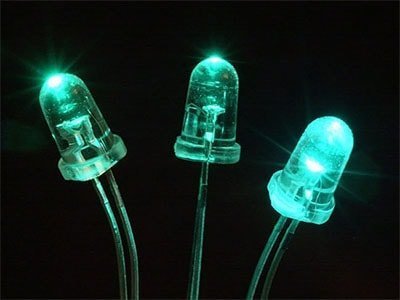
Una de las prioridades de la iluminación LED está relacionada con la fotobiología, un campo de investigación que estudia la interacción de la luz visible con los organismos vivos. El estándar europeo IEC-62471 se creó en 2006 como repuesta al crecimiento del uso de luces LED y su único peligro asociado a la luz azul. Una larga exposición a la luz azul de alta intensidad producida por los LED puede forzar e incluso dañar la retina, causar cataratas y crear quemaduras localizadas en los ojos.
Además, existen efectos documentados sobre personas que están constantemente expuestas a la luz azul, especialmente por la noche. La exposición a la luz azul por la noche se ha demostrado que suprime los niveles de melatonina y por tanto afecta los ritmos circadianos, lo cual puede producir insomnio, fatiga y elevar potencialmente el riesgo de padecer diabetes y cáncer.
El estándar IEC-62471 está hecho para unificar los procedimientos de prueba de los productos luminosos de luz blanca que iluminan espacios. El estándar dicta las pruebas para todos los productos que se adaptan a esa descripción. Esto es una respuesta ideal a una nueva y extendida tecnología cuyos efectos a largo plazo sobre el cuerpo humano aún no se han observado bien.
El camino a seguir
Los LED son más duraderos, más eficientes, más seguros y más económicos a largo plazo que cualquier otra tecnología luminosa actual.
Los LED son más duraderos, más eficientes, más seguros y más económicos a largo plazo que cualquier otra tecnología luminosa actual. Esto no solo es aplicable a las luces decorativas que adornarán sus fiestas, sino también a las luces que se utilizan todo el año. Hoy en día son más baratos y más accesibles que nunca, y representan un cambio de la tecnología tradicional establecida a otra en una transición de una rapidez extraordinaria.
A pesar de las claras ventajas que presentan, no están totalmente exentos de efectos negativos potenciales, siendo los peligros que presenta la exposición a la luz azul los más importantes. Por esta razón, su producción está altamente regulada por estándares internacionales que los mantienen seguros para un uso a largo plazo, de manera que no tiene que preocuparse sobre la decoración de su hogar con luces LED durante las fiestas, o incluso de la iluminación de su casa con ellos todo el año.
La adopción generalizada de los LED abre camino hacia un futuro brillante, y la mejor forma de simbolizar dicho futuro es iluminar su hogar con ellos en sus momentos festivos.